
Brand Refresh or Full Rebrand: Which Does Your Business Need?
Something about your brand no longer feels quite right. Perhaps the website looks dated, the visual identity feels inconsistent or the business has simply moved on since the brand was first created.
The question is whether everything needs to change.
A brand refresh and a full rebrand can both make a business feel more relevant, considered and aligned. The difference lies in how deep the problem goes.
A refresh improves what is already there. A rebrand questions whether the existing direction is still the right one at all.
Understanding that difference can save a business from changing too much, or from repeatedly fixing surface-level problems that actually require a more fundamental solution.

What is a brand refresh?
A brand refresh evolves an existing identity without completely replacing it.
The core positioning, recognition and personality of the brand remain relevant, but the way they are expressed may need refinement.
A refresh might involve updating:
typography
colour palette
logo details
photography and art direction
layout systems
packaging or printed materials
website styling
brand guidelines
The aim is usually to make the identity feel more consistent, contemporary and usable while preserving the elements people already recognise.
This can be especially valuable for an established business with a strong reputation. Starting again unnecessarily can remove familiarity that has taken years to build.
A refresh asks:
What is already working, and how can we make it work better?
Signs a brand refresh may be enough
A refresh is often the right choice when the business itself has not fundamentally changed.
Perhaps the identity was created several years ago and now feels visually dated. Maybe different designers, templates and campaigns have gradually introduced inconsistencies. Or perhaps the logo still feels appropriate, but the wider visual system was never properly developed.
You may also find that the brand works in some places but not others. The website feels considered, for example, while social content, signage or presentations seem disconnected.
In these situations, the foundation may still be strong. What is missing is clarity and cohesion.
A refresh can bring the existing identity back into focus without losing the recognition it already has.
What is a full rebrand?
Rather than simply asking how the current identity could look better, it considers whether the brand still reflects the business at all.
This may involve reconsidering:
positioning
audience
brand personality
messaging
naming
visual identity
art direction
customer experience
the way the brand presents itself across different touchpoints
A full rebrand is often necessary when the gap between the existing identity and the current business has become too large to solve through visual refinement alone.
If the company has changed significantly, keeping an old identity simply because it already exists can eventually become more limiting than useful.
Signs you may need a full rebrand
One of the clearest signs is that the business has moved in a different direction.
Perhaps the audience has changed. The offer has become more premium. A small local company has expanded into new markets. Several services have been consolidated into one clearer proposition. Or the business now wants to be known for something very different from what originally built its reputation.
In those cases, updating the typeface or colour palette may make the brand look newer, but it will not necessarily make it more accurate.
A full rebrand may also make sense when the existing identity has very little recognition worth preserving, or when it has become so generic that the business struggles to distinguish itself from competitors.
The question becomes:
Does this identity still represent the business we are trying to build?
If the answer is no, a refresh may simply postpone the larger decision.
The biggest mistake: changing visuals before identifying the problem
It is easy to assume that dissatisfaction with a brand means the logo needs to change.
Sometimes it does.
But a weak website, inconsistent photography or badly applied typography can make a perfectly good identity appear unsuccessful. Equally, a beautifully redesigned logo cannot fix unclear positioning or an offer that customers do not understand.
Before deciding between a refresh and a rebrand, identify what is actually causing the disconnect.
Ask:
Has the business changed?
Has the audience changed?
Is the positioning still accurate?
Do we still want to be perceived in the same way?
Which parts of the current brand are genuinely working?
Where does inconsistency appear?
Are we solving a strategic problem or mainly a visual one?
Those answers usually reveal how extensive the change needs to be.
A refresh should not be a compromise
Choosing a refresh does not mean taking the cheaper or less ambitious route.
Sometimes restraint is the stronger design decision.
An established logo may only need better typography around it. A recognisable colour might remain while the rest of the palette becomes more sophisticated. Existing visual elements can be refined and given a much clearer system.
The objective is not to make a brand look completely different.
It is to make it work better.
A thoughtful refresh can create a significant shift in perception while protecting the elements that already have meaning.

A focused refresh can create a noticeable shift without removing what already works.
View the Casa Rústica project
A rebrand should not change things simply for the sake of change
The same principle applies to a full rebrand.
Starting again does not mean every existing element needs to disappear.
There may be colours, symbols, language or visual references worth carrying forward. Good rebranding identifies those assets and decides intentionally whether they still belong in the next version of the business.
The strongest rebrands often feel like an evolution when viewed in hindsight, even if the final result looks dramatically different.
What matters is that the new identity has a reason to exist beyond looking newer.
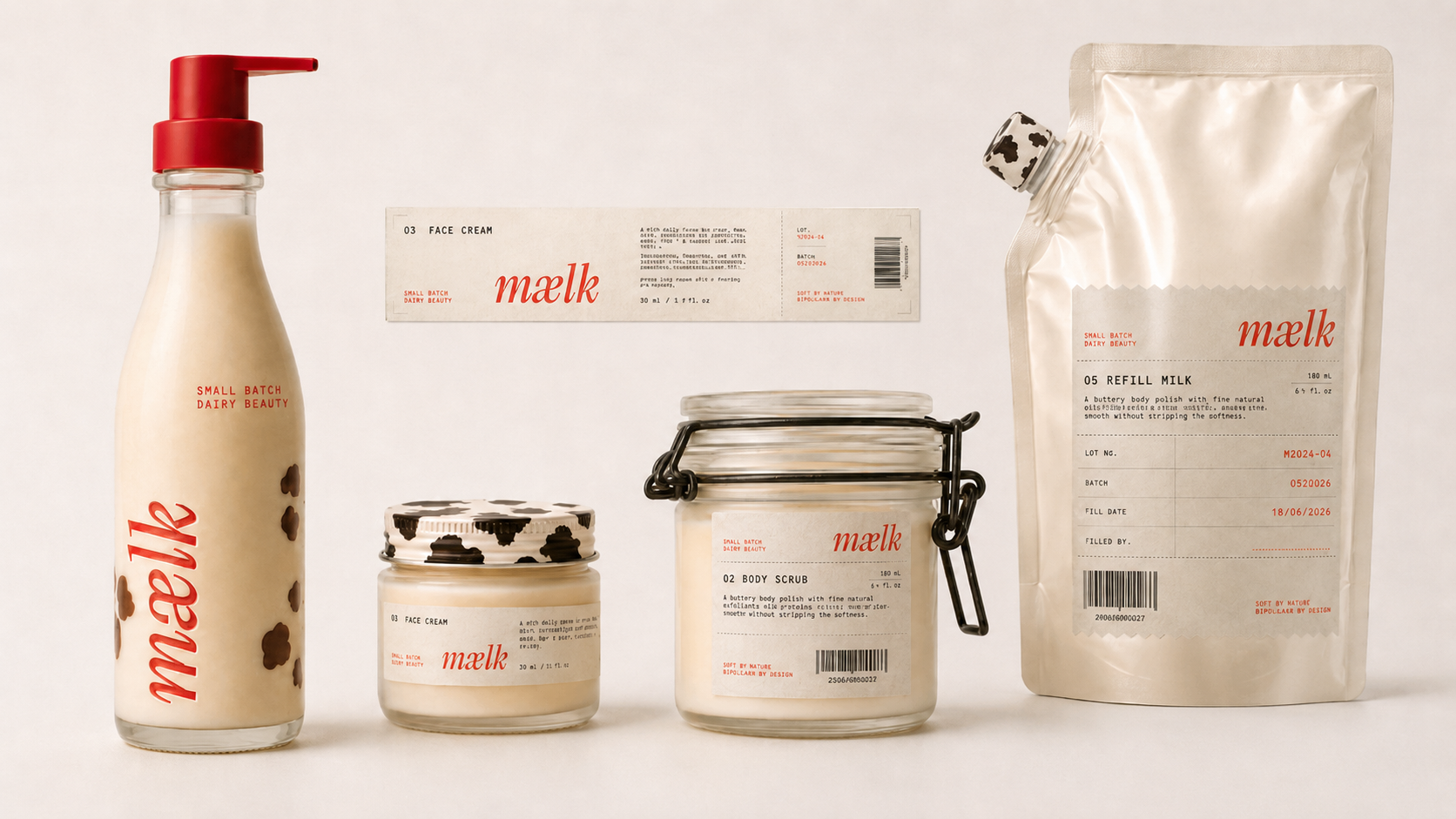
A full rebrand creates a new system around the direction the business is moving towards.
View the Mælk project
So, which does your business need?
A brand refresh is usually appropriate when the foundation still feels right, but the visual identity has become dated, inconsistent or difficult to use.
A full rebrand is more appropriate when the business, audience, positioning or direction has changed enough that the existing identity no longer communicates the right thing.
If you are unsure, avoid beginning with the question, “Should we change the logo?”
Start with:
What has changed in the business, and what is the current brand failing to communicate?
The answer will tell you far more.
A successful refresh or rebrand should ultimately do the same thing: make it easier for the business to present itself clearly, consistently and with confidence.
At mllx studio, I develop strategic brand identities and refresh existing visual systems based on what a business genuinely needs, rather than changing elements simply for the sake of making them new.