
When Is It Time to Rebrand? 7 Signs Your Business Has Outgrown Its Identity
A rebrand becomes worth considering when the identity of a business no longer reflects the business itself.
Perhaps your services have changed, your audience has shifted or the quality of your work has moved beyond the way the brand is currently presented. What once felt appropriate may now communicate an older version of the company.
That does not mean every dated logo needs to be replaced. Sometimes a thoughtful brand refresh is enough. In other cases, repeatedly changing colours, fonts or website elements only disguises a deeper problem.
So, when is it actually time to rebrand? These seven signs can help you understand whether your business needs a few focused refinements or a more fundamental change.

Reviewing different visual directions can reveal what still serves a brand and what may be holding it back.
1. Your business has evolved, but your brand has not
One of the clearest signs that it may be time to rebrand is that the business has changed significantly while its identity has remained the same.
Many businesses create their first logo and visual identity at the beginning, often with limited resources and an incomplete idea of where the company will eventually go. That identity may have worked perfectly well at the time.
Several years later, the services may be more specialised, the work more refined and the positioning more ambitious. Yet the brand still communicates the smaller or less established business that existed at the start.
This can create a noticeable gap between the quality of the experience you provide and the expectations created by your visual identity.
A rebrand can help close that gap, not by making the business appear to be something it is not, but by presenting more accurately what it has already become.
2. You are attracting the wrong type of client
Your brand will not control every enquiry you receive, but it plays an important role in shaping expectations.
Visual identity, language, photography and presentation all communicate something about the type of business you are. They influence how people perceive your level of service, pricing, personality and area of expertise before they speak to you.
If your ideal clients are looking for thoughtful, high-quality work but your current identity feels informal, generic or price-led, the right people may assume that the business is not for them.
The opposite can happen too. A brand may feel too polished, corporate or distant for a business built around warmth and personal service.
If there is a consistent mismatch between the clients you want to attract and the people your brand currently appeals to, the problem may not be visibility alone. The message being communicated may need to change.
3. Your brand feels inconsistent across different touchpoints
A business can have a perfectly acceptable logo and still feel visually disconnected.
Perhaps the website follows one style, the social media content another and the printed materials something else entirely. Every new piece is designed individually, but there is no clear visual language holding everything together.
This usually becomes more noticeable as a company grows. The business needs more proposals, campaigns, packaging, presentations, digital content or physical materials, yet the original identity was never designed to stretch across all of them.
A strong brand identity should provide enough structure to keep the business recognisable while still allowing variety. It should guide decisions around typography, colour, imagery, layout, materials and tone.
When each new asset requires reinventing the visual direction from the beginning, the identity may no longer be doing its job.
4. Your identity looks interchangeable with your competitors
Following visual trends can make a brand feel current, particularly when it is first created. The problem is that the same trends are often being used by many other businesses at the same time.
Within certain industries, this can result in dozens of brands using similar typefaces, colour palettes, photography and packaging styles. Each one may look attractive individually, but together they become difficult to distinguish.
This does not mean a brand needs to be loud or unconventional for the sake of being different. Distinctiveness can come from subtle choices, a recognisable use of typography, a particular photographic direction, an unexpected material or a visual idea rooted in the business itself.
5. You hesitate to share your website or brand materials
There is a difference between becoming bored with your brand and genuinely losing confidence in it.
Personal taste changes, and seeing the same identity every day can naturally make it feel less exciting to you than it does to someone encountering it for the first time. Boredom alone is not necessarily a reason to rebrand.
Persistent embarrassment is different.
You may avoid sending people to your website, apologise for your presentation before sharing it or feel that the quality of your work is much stronger than the way it is represented. Perhaps you create something new every time you need to promote the business because the existing materials never feel quite right.
That discomfort can be a sign that the identity no longer supports you with confidence. It may also reveal a deeper issue with clarity, consistency or positioning rather than a problem with one individual design element.
6. Your current identity cannot support where the business is going
A brand identity should work for the business as it exists today, but it should also provide room for growth.
You may be preparing to launch a new product line, enter a different market, expand into new locations or offer a broader range of services. Perhaps the logo works on a website but falls apart when applied to packaging, signage, social content or smaller digital formats.
Sometimes the original identity was created for one very specific purpose and was never developed into a wider system. As the company grows, its limitations become increasingly apparent.
This does not always require discarding everything. Existing recognition may be valuable, and certain elements may still feel relevant. The aim is to identify what can evolve and what is preventing the brand from moving forward.
A good rebrand should make the identity more useful, not simply more attractive.
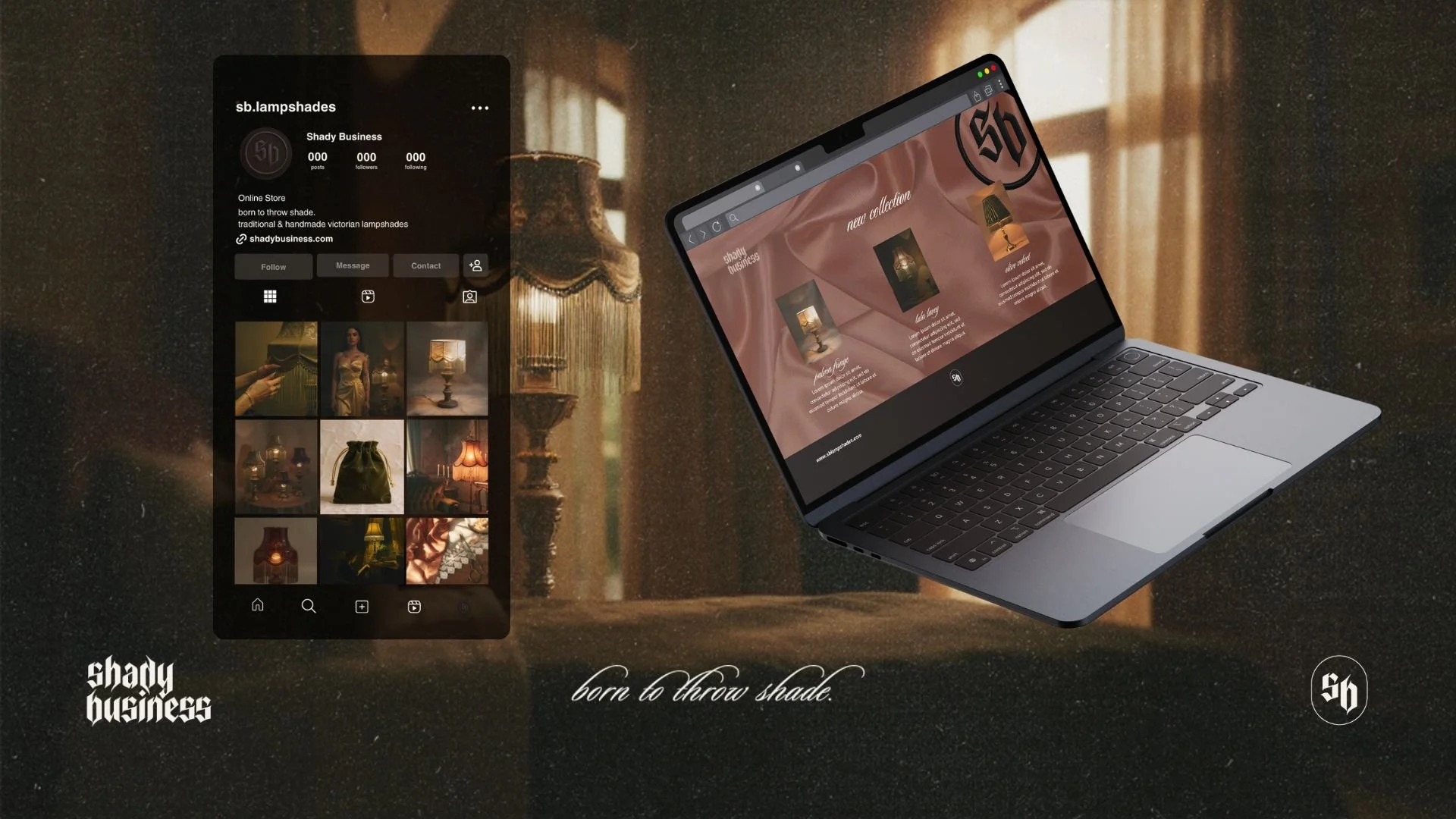
A strong identity should remain recognisable across every touchpoint, while leaving enough flexibility for the brand to grow. - Explore the Shady Business identity
7. You keep redesigning individual pieces without solving the problem
A new homepage, social template or colour palette can create a temporary sense of progress. But when the underlying direction is unclear, the same dissatisfaction usually returns.
You may find yourself changing fonts every few months, purchasing new templates, revising the logo slightly or redesigning individual materials without ever feeling that the brand has become more coherent.
When this happens repeatedly, the issue is rarely the individual asset. It is more likely that the business lacks a clear strategic and visual foundation.
Without that foundation, every decision becomes subjective. It is difficult to know what belongs, what does not and what the brand should communicate in the first place.
A successful rebrand creates a framework for those decisions. It gives the business a clearer direction and makes future design work easier, faster and more consistent.
Does your business need a brand refresh or a full rebrand?
Recognising that something needs to change does not necessarily mean starting again from zero.
A brand refresh may be enough when the positioning and overall direction are still relevant, but the visual execution has become dated or inconsistent. The existing identity may already have recognition worth preserving, while elements such as typography, colour, imagery or layout need refinement.
A full rebrand is more appropriate when the business itself has changed substantially. The audience, offer, values or positioning may now be different, or the existing identity may communicate the wrong message altogether. In this case, changing the surface without reconsidering the foundation is unlikely to solve the problem.
The goal is not to change as much as possible. It is to understand what still serves the business, what should evolve and what is actively holding it back.

A focused refresh can create a noticeable shift in how a brand is perceived.
View the Casa Rústica project
A rebrand should reflect real change
A successful rebrand is not simply a visual makeover. It should make the business clearer, more recognisable and more closely aligned with the direction it is already moving in.
If several of these signs feel familiar, it may be worth reviewing the identity as a whole before redesigning another individual touchpoint. The right answer might be a focused refresh, a more flexible visual system or a complete rebrand.
The most effective solution is not always the most dramatic one. It is the one that allows the business to communicate with greater clarity and move forward with confidence.
At mllx Studio, I create strategic brand identities that connect positioning, visual direction and real-world application across the places a brand needs to live.